
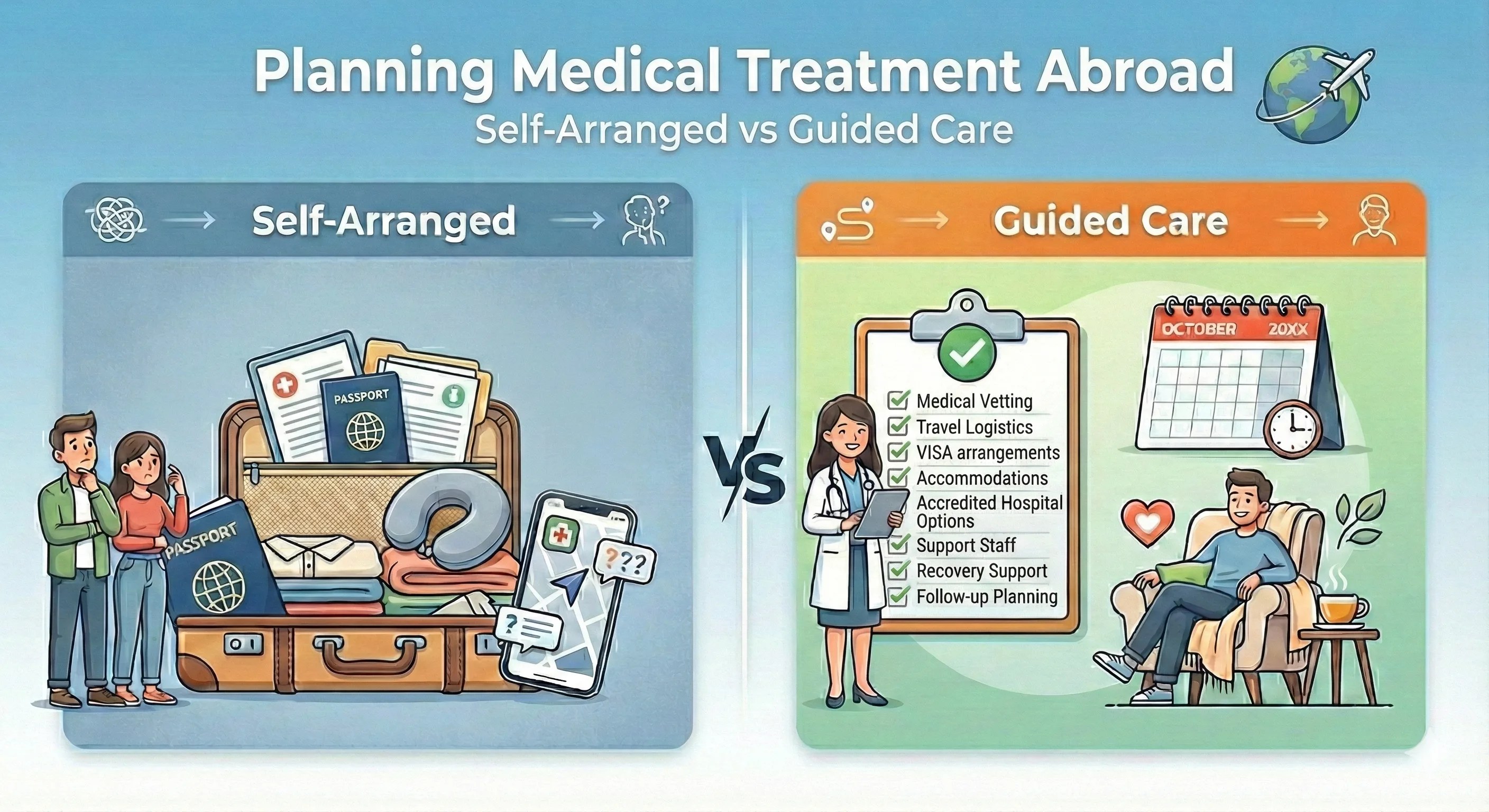
When patients consider traveling abroad for medical treatment, one of the first decisions they face is how to plan the journey.
Some patients choose to contact hospitals directly and arrange everything themselves. Others prefer guided care, where a coordinator helps plan treatment, recovery, and logistics together.
Both approaches can work. The right choice depends on the complexity of treatment, the patient’s condition, and how much uncertainty a family is comfortable managing. This guide explains the differences so patients can make informed decisions.
What Is Self-Arranged Medical Care?
Self-arranged care means the patient or family:
- contacts hospitals directly
- communicates with doctors on their own
- arranges travel, accommodation, and visas independently
- coordinates follow-ups and recovery planning themselves
This approach can be suitable for:
- straightforward procedures
- patients already familiar with the country
- treatments that do not require extended recovery
However, for complex treatments, families often discover that planning does not end at hospital admission.
What Is Guided Medical Care?
Guided care involves working with a medical care coordinator who helps plan the treatment journey from start to recovery.
In this model:
- hospitals provide medical treatment and clinical decisions
- coordinators assist with non-clinical planning and coordination
Guided care typically includes help with:
- Finding good hospitals and surgeons for treatment
- Understanding treatment options and timelines
- Planning recovery needs alongside the procedure
- Arranging accommodation suitable for medical recovery
- Helping arrange travel, visas, and the practical needs of the caregiver staying with the patient during treatment and recovery
- Ensuring continuity during follow-ups
The goal is not to replace the hospital, but to reduce uncertainty and fragmentation for patients traveling from another country.
Where the Differences Matter Most
The difference between self-arranged and guided care becomes clearer in situations where:
Treatment Is Complex
Procedures such as cancer treatment, transplants, cardiac surgery, or multi-stage care often involve:
- longer hospital stays
- immune suppression or physical limitations
- strict recovery requirements
Recovery Extends Beyond Discharge
Many treatments require:
- weeks or months of monitored recovery
- safe and sometimes sterile accommodation
- dietary precautions
- quick access to medical teams if complications arise
Families who plan only for the procedure often underestimate the importance of this phase.
Cost Considerations: More Than the Procedure
Self-arranged care may appear cheaper initially because it focuses on the treatment cost alone. However, families sometimes encounter unexpected expenses later, such as emergency hospital visits, last-minute accommodation changes, extended stays due to recovery complications, etc.
Guided care focuses on planning costs more predictably by considering treatment and recovery together. This does not guarantee lower costs, but it often reduces surprises.
Choosing What’s Right for You
There is no universal “better” option.
Self-arranged care may suit patients who:
- are comfortable navigating healthcare systems
- have local support
- require short, low-risk procedures
Guided care may suit patients who:
- are undergoing complex or high-risk treatment
- are traveling long distances
- want clearer planning around recovery and logistics
The most important factor is understanding what each approach involves before making a decision.
A Note for International Patients
When treatment takes place in another country, small planning gaps can feel much larger. Language differences, unfamiliar systems, and distance from home all add complexity.
Many international patients choose guided care not because they cannot arrange things themselves, but because they prefer clarity, continuity, and support during a stressful time.
Considering Treatment Abroad?
If you are exploring treatment abroad and want to understand which approach fits your situation, speaking with a medical care coordinator can help clarify your options.