
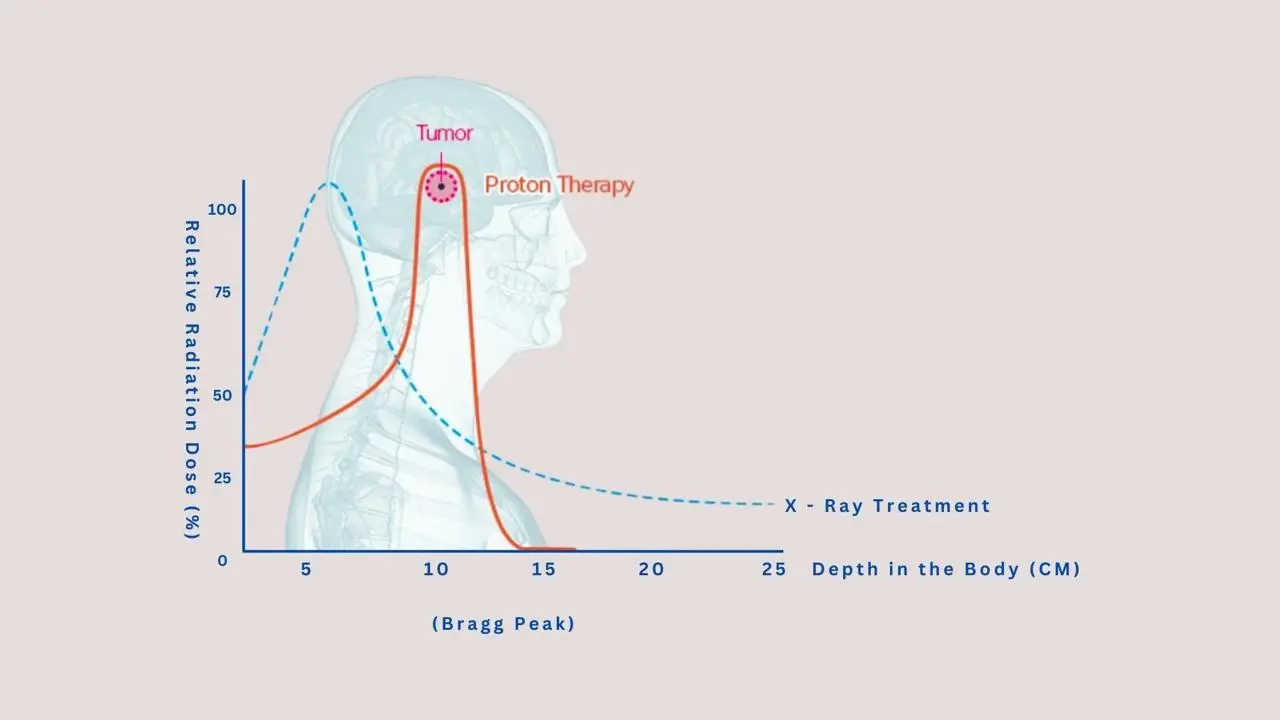
Proton Beam Therapy (PBT) is considered one of the most precise and advanced forms of radiation treatment available today. It is particularly valuable for cancers located near critical organs and for pediatric patients, where long-term side effects must be minimized.
Despite its clinical value, access to PBT in countries like the United States is often constrained by high costs, limited availability, and insurance hurdles.
But very few realise that this life-changing treatment is now affordably within reach for global teams.
What Makes Proton Beam Therapy “Gold-Standard” ?
Unlike conventional X-Ray radiation, Proton Beam Therapy uses protons that are delivered directly to the tumor with minimal exit dose. This precision helps protect surrounding healthy tissues and organs.
This is why PBT is often recommended for:
- Tumors near the brain, spine, heart, or eyes
- Pediatric cancers
- Head and neck cancers
- Select complex or recurrent cases
This precision is why PBT is often considered the gold standard in select cancer cases.
India’s Proton Therapy Centers: Comparable to the World’s Best
India’s leading proton therapy centers operate with FDA- and CE-approved technology, using the same treatment systems found in top hospitals in the U.S., Europe, and Asia.
Care is delivered through multidisciplinary teams, following internationally accepted clinical protocols. Many specialists involved in proton therapy programs in India have trained or practiced abroad and regularly collaborate with overseas oncologists.
The lower cost of care in India reflects healthcare economics and operational efficiencies, not a reduction in quality or safety standards.
Indian hospitals supporting international patients offer:
- Dedicated international patient teams
- English-speaking medical and support staff
- Caregiver-friendly treatment environments
This infrastructure helps reduce disruption for families who may need to remain close to the patient throughout treatment.
Cost Comparison: India vs. the United States
For employers and families, cost remains one of the most decisive factors.
Typical pricing illustrates the gap clearly:
- United States: USD 100,000–250,000+
- India: USD 30,000–60,000
For HR leaders managing self-funded plans, international benefits, or expat coverage, this difference can translate into 60–75% savings per case, without sacrificing treatment quality.
Why This Matters to HR Leaders and Global Employers
From a benefits and workforce perspective, access to affordable advanced care is increasingly a strategic issue.
Proton Beam Therapy in India offers employers:
- Greater cost predictability for high-end oncology cases
- Fewer insurance coverage disputes related to “investigational” classifications
- International insurers and third-party administrators
- HR and benefits teams to support documentation and pre-authorization
- Faster treatment timelines for employees and dependents
- A tangible demonstration of employee-centric healthcare support
Treatment Possible works directly with HR and benefits teams to ensure this option is structured, compliant, and employee-friendly.
The Role of Treatment Possible: Bridging Care, Cost, and Continuity
Accessing treatment in another country can feel overwhelming, especially during a cancer diagnosis. This is where Treatment Possible plays a central role.
We work alongside patients, families, employers, and HR teams to:
- Identify appropriate proton therapy centers in India
- Coordinate medical records, opinions, and treatment planning
- Align care with the patient’s home-country oncologist
- Support insurance documentation and cost clarity
- Manage travel, accommodation, and on-ground logistics
Our role is not to replace the hospital but to simplify your journey, ensure transparency, and keep care coordinated from start to finish.
Supporting Patients and Families Beyond Treatment
Proton therapy typically requires 4–6 weeks of treatment. During this time, we help patients and caregivers navigate practical realities so they can focus on treatment, not logistics.
This includes:
- Coordinating accommodation near the treatment center
- Assisting with local support needs like forex exchange, food, etc.
- Acting as a consistent point of contact throughout care
A Particularly Important Option for Pediatric Patients
For children, Proton Beam Therapy is often preferred because it reduces radiation exposure to developing organs, lowering the risk of long-term complications.
Treatment Possible supports families through:
- Care coordination across borders
- Communication with pediatric specialists
- Planning for follow-up care after returning home
For employers supporting employees with dependent children, this pathway can be life-changing.
Not a Compromise—A Considered Choice
Choosing Proton Beam Therapy in India is not about opting for lesser alternative. It is about accessing globally aligned cancer care, delivered more efficiently and supported by a structured care partner.
With Treatment Possible, patients and employers are not navigating this alone, they are supported at every step.
Summary: What Decision-Makers Should Know
Proton Beam Therapy in India offers:
- Internationally benchmarked technology and expertise
- Significant cost advantages compared to Western markets
- Strong relevance for pediatric and complex cancer cases
- A viable, responsible option for employers and patients alike
For HR leaders, benefits managers, and families navigating serious diagnoses, India represents a credible, high-quality pathway to advanced cancer care without the prohibitive cost barriers often seen elsewhere.
Ready to revolutionize your cancer benefits strategy?
We exclusively partner with JCI-accredited hospitals, ensuring the highest international standards of patient care and safety.