
Verified By: Dr. Ketan Modak (MBBS-2009, MD-2014, DM-2022)
Bone Marrow Transplant : Accessing Expert Care Within Budget
A bone marrow transplant can be life-saving for many blood disorders and cancers. If you are exploring specialized BMT options that fit your budget, this guide explains treatment types, typical costs in countries having advanced medical facilities and experts, what affects pricing, and how to plan your journey with confidence.
Understanding What is Bone Marrow Transplant
A Bone Marrow Transplant (also called a stem cell transplant or as a Hematopoietic Stem Cell Transplant) is a medical procedure used to replace damaged or diseased bone marrow with healthy stem cells. Bone marrow is the soft, spongy tissue inside your bones that produces blood-forming stem cells, which develop into red blood cells, white blood cells, and platelets.
When the bone marrow stops working properly due to certain cancers, genetic disorders, or severe blood diseases the body is unable to make healthy blood cells. A bone marrow transplant helps restore this vital function by introducing healthy stem cells that can rebuild the blood and immune system.
Why is BMT needed?
Doctors may recommend you a BMT when the bone marrow is unable to produce healthy cells or when diseased cells must be completely replaced.
Common conditions where BMT may be advised include:
- Blood disorders such as Plasma cell disorders
- Bone marrow diseases
- Hodgkin’s lymphoma
- Non-Hodgkin’s Lymphoma
- Multiple Myeloma (MM)
- Acute Myeloid Leukemia (AML)
- Chronic Myeloid Leukemia (CML)
- Acute Lymphoblastic Leukemia (ALL)
- Adrenoleukodystrophy
- Bone marrow failure syndromes
- Hemoglobinopathies
- Neuroblastoma
- POEMS syndrome
- Primary amyloidosis
- Inborn errors of metabolism
- Myelofibrosis
- Myelodysplastic syndromes
- Immune deficiency
- Bone marrow damage: The Patient who undergoes chemotherapy may suffer from bone marrow damage. These patients receive treatment using a bone marrow transplant.
- Aplastic Anemia: In this disorder, the patient’s bone marrow usually loses its ability to create blood cells.
- Neutropenia: A genetic disorder that causes chronic infections
- Sickle cell anemia: A genetic blood disorder that can cause distorted red blood cells
- Thalassemia: It is an inherited blood disorder where the body produces an irregular type of hemoglobin.
In many cases, a bone marrow transplant offers the best chance for long-term recovery or cure, especially when other treatments are no longer effective.
How does BMT work?
BMT is not a surgery, but rather a complex infusion process. It generally Involves:
- Preparation (conditioning therapy):
High-dose chemotherapy or radiation is used to destroy diseased or damaged bone marrow cells. - Stem cell infusion:
Healthy stem cells are infused into the bloodstream through an IV, similar to a blood transfusion. - Engraftment and recovery:
Over the next few weeks, the new stem cells travel to the bone marrow, where they begin producing healthy blood cells.
This recovery phase is carefully monitored, as the immune system takes time to rebuild.
Types of Bone Marrow Transplants:
The type of transplant recommended depends on the your condition, age, and donor availability:
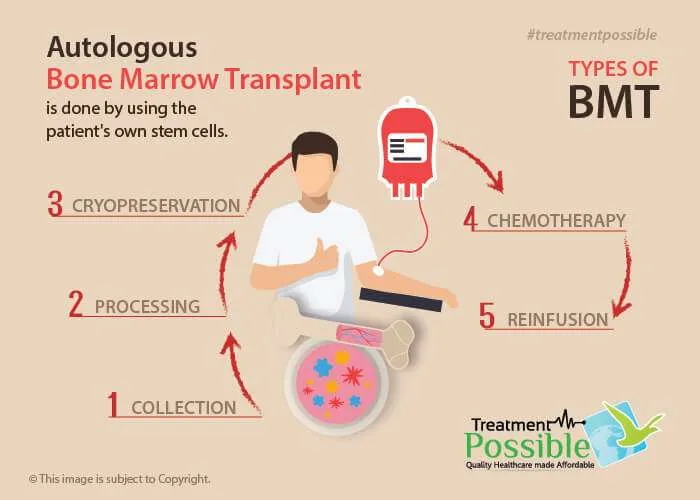
Stem cells are collected from your own bloodstream (often before high-dose chemotherapy). They are then re-infused to rescue the bone marrow. This is safer and carries no risk of rejection.
- When it is commonly used
- Multiple myeloma
- Certain lymphomas
- Some solid tumors requiring high-dose chemotherapy
- Clinical considerations
- No risk of graft-versus-host disease (GVHD)
- Faster immune recovery compared to donor transplants
- Lower infection risk after engraftment
- Cost impact: Autologous transplants are generally less complex and therefore less expensive than donor-based transplants. In India, costs are typically lower due to shorter hospital stays and fewer long-term immunosuppressive medications.
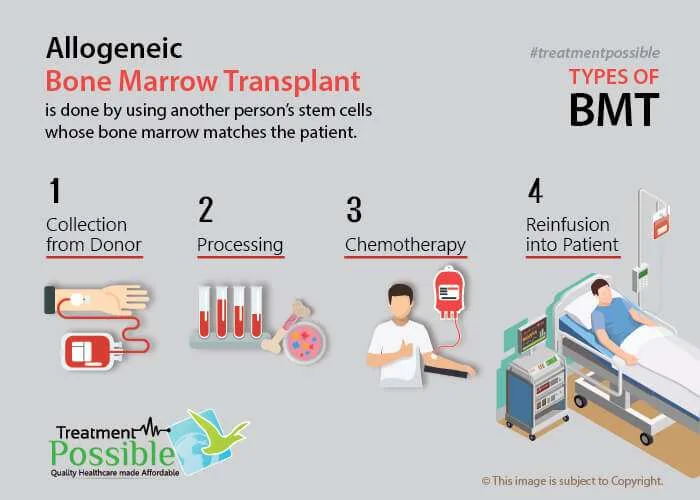
Stem cells are harvested from a donor (sibling, parent, or registry match). This carries higher risks but is often necessary for aggressive leukemias as the donor cells actively fight the cancer.
- When it is commonly used
- Acute and chronic leukemias
- Aplastic anemia
- Myelodysplastic syndromes (MDS)
- Certain inherited blood disorders
- Clinical considerations
- Strong graft-versus-disease effect, which can reduce relapse risk
- Higher monitoring needs due to risk of GVHD
- Longer immune system recovery period
- Cost impact
- Donor matching and testing
- Extended hospitalization
- Post-transplant medications and follow-up care
Uses a half-matched donor, often a parent or child.
- When it is commonly used
- Patients without a fully matched donor
- Pediatric and adult leukemia cases
- Urgent transplant situations
- Clinical considerations
- Expands donor availability significantly
- Requires advanced expertise and strict infection control
- Slightly higher monitoring needs in the early recovery phase
- Cost impact
- Specialized medications
- Intensive post-transplant care
- Longer observation periods
- Umbilical cord blood transplant: The stem cells can be collected from an umbilical cord immediately after a baby’s birth.
The stem cells can be collected from an umbilical cord immediately after a baby’s birth.
Each type has different medical considerations, recovery timelines, and cost implications, which is why understanding the type of BMT is important when planning treatment.
Considering Treatment Options?
If you’re comparing bone marrow transplant options or trying to understand how costs and treatment pathways apply to your specific diagnosis, reviewing medical reports with a specialist can provide useful clarity.
Our team can help by:
There’s no obligation—many patients use this step simply to better understand their options before deciding how to move forward.

Is Bone Marrow Transplant Safe?
Bone marrow transplants are complex procedures and require experienced medical teams and advanced hospital infrastructure. When performed at specialized centers, BMT outcomes have improved significantly over the years.
Like any major medical treatment, there are risks and potential complications, but for many patients, the potential benefits outweigh the risks, especially when the procedure is done at the right time and in the right setting.
Why the Type of BMT Matters When Planning Treatment Abroad?
For patients considering treatment in another country, understanding the exact type of BMT recommended is essential. It directly influences:
- Total treatment cost
- Length of stay in the hospital and country
- Post-transplant care requirements
- Need for caregiver support
This is why most hospitals in India provide individualized treatment plans and cost estimates after reviewing medical reports, rather than offering a single fixed price.
Cost Of Bone Marrow Transplant in Different Countries
Patients considering a bone marrow transplant often compare treatment options across multiple countries. While medical protocols for BMT are largely standardized worldwide, the total cost of treatment varies widely depending on the country, healthcare systems, hospital infrastructure, and post-transplant care expenses.
In India, BMT typically costs USD 25,000–55,000, compared to USD 60,000–120,000 in Turkey, USD 120,000–250,000 in Singapore, and over USD 200,000 in the United States. Lower hospital costs, affordable medications, and streamlined care delivery contribute to the difference, while medical protocols remain comparable.
Approximate Bone Marrow Transplant Cost by Country
| Country | Estimated BMT Cost Range* | Notes |
|---|---|---|
| India | USD $15,000 – $35,000 | Wide availability of all transplant types; lower hospital and medication costs |
| Turkey | USD $60,000 – $120,000 | Modern facilities; costs vary significantly between public-linked and private hospitals |
| Singapore | USD $120,000 – $250,000 | High-end care; among the most expensive in Asia due to infrastructure and staffing costs |
| South Africa | USD $70,000 – $140,000 | Limited number of transplant centers; availability depends on diagnosis |
| USA | USD $200,000 – $400,000+ | Costs driven by insurance models and prolonged hospital stays |
| United Kingdom | USD $150,000 – $300,000+ | NHS wait times or expensive private care for international patients |
*Actual costs depend on transplant type (autologous, allogeneic, haploidentical, unrelated donor), donor availability, complications, and length of hospital stay.
Why Is There Such a Large Cost Difference?
The lower cost of bone marrow transplant in India does not come from reduced medical standards or compromised care. Instead, it reflects differences in healthcare systems and cost structures:
- Lower hospital and infrastructure costs
Operational expenses, staffing, and facility costs are significantly lower than in Western countries. - Affordable medications and diagnostics
Many essential drugs and tests are locally produced and regulated, reducing overall treatment expenses. - Specialist-led care without insurance inflation
Pricing is not driven by complex insurance billing systems, which often increase costs in the US. - High procedural volumes at specialized centers
Many Indian transplant centers perform a large number of BMTs annually, improving efficiency and expertise.
How India Compares for International BMT Patients
For patients who require a bone marrow transplant but face financial or access barriers at home, India is often considered because it offers:
- All major types of bone marrow transplants under one system
- Internationally accepted transplant protocols
- Experienced multidisciplinary transplant teams who often perform 3x the number of transplants per year compared to western counterparts, leading to high proficiency in handling complications.
- Shorter wait times compared to public healthcare systems
- More predictable overall treatment and medication (chemo and Immunosuppressants) costs.
Importantly, treatment decisions are typically based on individual medical reports, not fixed pricing, allowing for a more accurate assessment of suitability and cost. In short the quality of treatment is ensured due to large volume and solid infrastructure.
Understanding how treatment costs differ globally can help patients and families plan their care more realistically and ask the right questions before moving forward.
Planning Your Next Steps
If you or your loved one has been advised to undergo a bone marrow transplant, it’s natural to have questions about treatment options, timelines, and overall costs—especially when considering care in another country.
Before making any decisions, many patients choose to review their medical reports with a transplant specialist to better understand:
- Whether a bone marrow transplant is recommended in their case
- Which type of transplant may be appropriate
- What the expected treatment pathway and recovery period might look like
- How treatment costs are likely to vary based on individual needs
If you would like help navigating this process, our team can assist in reviewing medical records, explaining available options, and connecting you with experienced transplant centers in India. This allows patients and families to make informed choices at their own pace, without pressure.
Consult An Experienced Doctor
Taking the time to understand your options is an important first step toward planning care with confidence.